Post-Hospital Recovery Guide | Wound Care & Surgical Supplies NJ
I have sat with countless families at Bergenline Drugs who have just made the drive back from Palisades Medical Center or Christ Hospital. They often arrive with a stack of discharge papers and a look of pure overwhelm. While the hospital does a world-class job of performing the surgery, the moment you cross your own threshold in West New York or North Bergen, the responsibility of healing shifts entirely to you and your loved ones.
One of the biggest hurdles in modern healthcare is the "gap" between the hospital bed and the home bed. Many patients are sent home with just enough gauze for the first twenty-four hours, leaving them scrambling for the right medical supplies. NJ weather or traffic might make it difficult to find at the last minute.
As a pharmacist who specializes in recovery, I want to make sure you have the tools to heal correctly the first time. Preventing a return trip to the hospital starts with having a professional-grade recovery station ready before you even get in the car to come home.
The Foundation of Advanced Wound Care
In 2026, we have moved far beyond the basic adhesive bandage. If you are managing a surgical incision, the environment around that wound is everything. When I help neighbors with wound care 07093 protocols, we focus on "moist wound healing," which has been shown to speed up tissue repair and reduce scarring.
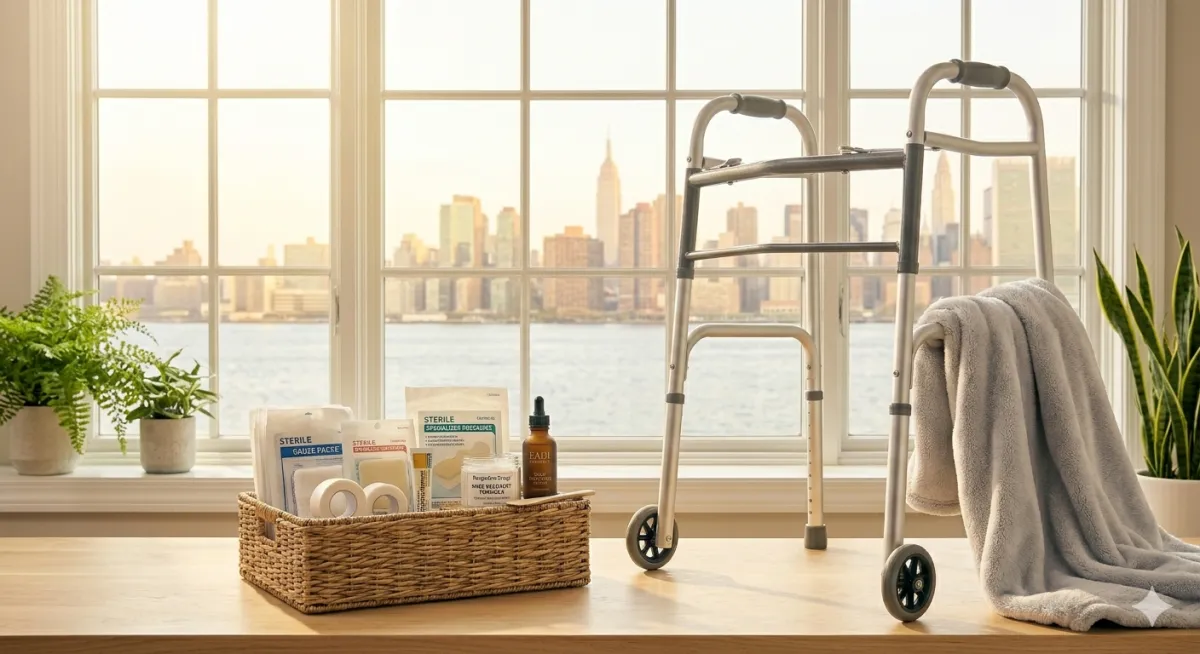
You need to have a stock of specialized dressings that do more than just cover a cut. This includes silicone-bordered foams that protect sensitive skin from "medical tape stripping" and silver-infused dressings that provide a constant antimicrobial barrier. I often see patients try to make do with whatever they have in the cabinet, but using a non-sterile or improper dressing is the fastest way to invite an infection that could set your recovery back by weeks.
Safety and Mobility in the Home
The first few days home are the highest risk for falls. Whether you’ve had a knee replacement or abdominal surgery, your balance and strength are not what they usually are. This is where having the right surgical supplies, Bergenline residents can rely on, becomes a safety necessity rather than an option.
We help our clients outfit their homes with the "Big Three" of mobility:
The Adjusted Walker: We don't just sell you a walker; we ensure it is fitted to your height so you aren't hunching over, which can cause back strain and further instability.
Bathroom Safety: Most bathrooms in our older Hudson County buildings were not designed for post-op recovery. A simple shower chair or a raised toilet seat can be the difference between a safe morning routine and a dangerous slip.
Professional Monitoring: I always recommend keeping a pulse oximeter and a digital blood pressure cuff at your bedside. Being able to give your doctor accurate numbers over the phone can prevent unnecessary trips to the emergency room.
Navigating Insurance for Your Supplies
A major pain point for my neighbors is the cost. Many people don't realize that a significant portion of your recovery gear may be covered by your insurance or Medicare Part B as "Durable Medical Equipment."
At Bergenline Drugs, we take the lead on the paperwork. We work directly with the discharge planners at Christ Hospital and local surgical centers to ensure that your supplies are coded correctly. You should be focusing on your physical therapy and your rest, not on whether or not a claim was filed correctly.
FAQs
What are the most important medical supplies to have at home after surgery?
The most critical supplies include sterile wound dressings (gauze, medical tape, and antiseptic washes), mobility aids like walkers or canes if your balance is affected, and safety equipment for the bathroom. It is also highly recommended to have a dedicated medication organizer to keep track of new post-op prescriptions.
How do I know if my surgical incision is becoming infected?
You should watch for increased redness that spreads away from the incision, swelling, warmth at the site, or any foul-smelling discharge. A fever over 101 degrees is also a major red flag. If you notice these symptoms, contact your surgeon immediately.
Does insurance cover the cost of wound care supplies in New Jersey?
Many specialized wound care products are covered if they are prescribed by a doctor for a specific chronic or surgical wound. At Bergenline Drugs, we can help you determine which items are covered by your specific Medicaid, Medicare, or private insurance plan.
How often should I change my surgical dressings?
You should always follow your surgeon’s specific instructions, but generally, dressings are changed every 24 to 48 hours or whenever they become "saturated" (soaked through). Always wash your hands thoroughly before touching the area to maintain a sterile environment.
Where can I find a local pharmacy that stocks surgical-grade equipment in Hudson County?
Bergenline Drugs is a full-service provider of surgical and medical supplies for the West New York and Union City areas. We carry everything from professional wound care kits to mobility aids and can provide local delivery for those who cannot easily leave their homes during recovery.
Your Recovery is Our Priority
Healing is a journey that shouldn't be taken alone. Having the right equipment at your side makes that journey much smoother.
Would you like me to review your hospital discharge list today to see which items we can have delivered to your home this afternoon, or shall we check your insurance coverage for a professional-grade walker to help you get moving again safely?
